Welcome
Water is not a commercial product like any other but, rather, a heritage which must be protected, defended and treated as such (EU Water Framework Directive)
Welcome to the WFD Fish website – an online resource for information on fish monitoring for the Water Framework Directive (WFD) in Ireland.
The responsibility of monitoring fish for the WFD has been assigned to Inland Fisheries Ireland (previously the Central and Regional Fisheries Boards) with over 300 sites encompassing lakes, rivers and transitional waters (estuaries) being monitored throughout the country on a three year rolling programme.
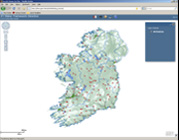
Use the menus above and left to find out more about the WFD and fish, view the WFD fish map viewer, or to download reports on each survey.
LATEST NEWS
12 April 2024
Fish Stock Survey of Lough Macnean Upper, August 2022
Fish Stock Survey of Lough Macnean Lower, August 2022
Fish Stock Survey of Lickeen Lough, September 2022
Fish Stock Survey of Glasshouse Lake, September 2022
Fish Stock Survey of Lough Bridget, August 2022
Fish Stock Survey of Lough Barra, July 2022
05 March 2024
Fish Stock Survey of Lough Ree, June 2022
03 January 2024
14 November 2023
Fish in Rivers Factsheet: 2022 no. 2 – SHIRBD Upper Inny River Catchment
28 September 2023
Fish in Rivers Factsheet: 2022 no. 1 – ERBD Vartry River Catchment
Fish in Rivers Factsheet: 2022 no. 3 – WRBD Bunowen River Catchment
Fish in Rivers Factsheet: 2022 no. 4 – ERBD Boyne Catchment
Fish in Rivers Factsheet: 2022 no. 5 – NWIRBD Annalee River Catchment
Fish in Rivers Factsheet: 2022 no. 6 – SWRBD Blackwater (Munster) River Catchment
Fish in Rivers Factsheet: 2022 no. 7 – ShIRBD River Shannon Catchment
27 September 2023
Sampling Fish for the Water Framework Directive – Summary Report 2023